
Minimally invasive surgeries require specialized elements that deliver precision, durability, and compactness to function seamlessly. We produce CNC-machined aluminum housings that meet all three criteria and maintain compliance with the highest medical standards.
In this blog, we’ll explore what endoscopic components are, the benefits of aluminum, machining technologies such as 5-axis CNC and EDM, surface finishing, cleaning procedures, and design recommendations for housings that are both high-quality and easy to produce in large quantities.
What is an Endoscopic Component?
Endoscopic equipment, together with precision manufacturing, is the core element of medical devices used for minimally invasive procedures. These include small cameras, fiber-optic illumination systems, sensors, and mechanical/electronic control units. To provide surgeons with excellent visualization, precise feedback, and accurate instrument control, each component must be flawless and fit within tiny and compact enclosures.
With these limits, the parts require high-quality CNC-machined aluminum housings to protect the delicate internals without adding unnecessary weight or bulk.
Importance of CNC-Machined Aluminum Housings for Endoscopic Components Manufacturing

In addition to protecting endoscopic components, precision CNC-machined aluminum housings provide structural support, improved heat dissipation, optical alignment, lightweight handling, and, most importantly, consistent production of high-performing devices.
Dimensional Accuracy
Extreme precision is required for endoscope components, as even the smallest misalignment can cause issues for the imaging/sensing components. With CNC machining, the lenses, LEDs, and micro-actuators can be configured to provide precise spacing, ensuring clear optics and smooth mechanics throughout the endoscope’s life.
Complex Geometries Capabilities
The endoscopic housings and housings for other medical devices usually require complex, precise interior routing for wiring, LED cooling pathways, and fluid routing. With CNC machining, we can create advanced 3D designs and interior voids without negatively affecting the strength of the housing.
Consistency and Repeatability
Medical devices require the assembly of several components while ensuring each part is identical to the next. CNC machining allows each housing to be a replica of the original CAD design, which can help with regulatory compliance, reduce assembly errors, and ensure consistent behavior for end users, particularly surgeons.
Material Integrity Preservation
With the proper machining strategies and tools, we can maintain a certain level of metal integrity that contributes to aluminum’s strength, thermal, and corrosion properties, which may be required for multiple sterilization cycles and overall device functionality.
Why Use Aluminum for Medical Endoscopic Component Housings
Superior Strength-to-Weight Ratio
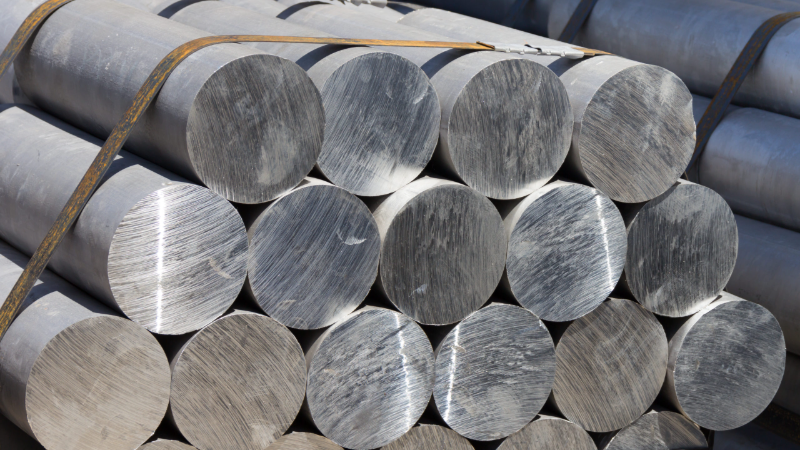
Aluminum offers great structural support, and with its help, endoscopic devices will remain easy to handle, even during the most careful surgical procedures, and will also remain rigid to protect components from internal shocks and structural stresses.
Excellent Thermal Conductivity
Some endoscopic components, like LEDs, cameras, and sensors, create heat. For endoscope manufacturers, using aluminum housings with high thermal conductivity will help maintain the performance and prolong the lifespan of the internal components by preventing overheating.
Natural Corrosion Resistance
Medical devices are subjected to moisture, cleaning fluids, and body fluids. To minimize moisture damage and prevent degradation of the housing material, aluminum offers inherent corrosion resistance.
High Sterilization Compatibility
Endoscopic housings are subjected to numerous autoclave cycles and exposure to chemicals and disinfectants. This is why aluminum is an excellent material of choice for endoscope manufacturers: its resistance ensures that tolerances remain unaltered, as does the surface, and the integrity of the devices, ensuring that they remain safe and effective for surgical procedures.
Precision CNC Machining Techniques for Complex Endoscopic Component Aluminum Housings

5 Axis CNC Machining
This process can control movement on five axes simultaneously, and is therefore best suited for complex 3D and inner features. We can process deep cavities, angled and rounded channels in one go, preventing assembly mistakes and retaining the precision needed for dimensionally sensitive optical and electronic parts.
Swiss Turning
Swiss turning is the best solution for long and thin cylindrical parts with strict diameter and tolerance requirements. It is especially suitable for guide shafts, pins, and small connectors in endoscope housings, where the concentricity and surface finish have to be perfect.
Electrical Discharge Machining (EDM)
For endoscope manufacturing companies, EDM is ideal for developing complex shapes and features, including sharp internal corners and small cavities, that are inaccessible to traditional cutting tools. It is perfect for incorporating features into a housing, e.g., sensor slots, microchannels, and mounting pockets, without adding any mechanical stress or deformation to aluminum.
CNC Turning
CNC turning is one of the most effective ways to produce cylindrical or symmetrical housings with high precision and efficiency. It works very well for endoscopic component manufacturing, producing threaded sections and round housings that demand uniform wall thickness, a perfect surface finish, and strict diameter control on the same part, with continuous high-level repeatability.
Advanced Surface Finishes for CNC-Machined Aluminum Housings of Endoscopic Components

Type III Hardcoat Anodizing
Hardcoat anodizing creates a thick, dense oxide coating which improves surface hardness. This oxide coating protects housings from scratches, abrasive damage, and wear and tear from repetitive surgical handling.
Additionally, anodizing improves chemical resistance and electrical insulation, which is essential for housing delicate electronic parts.
Non-Reflective Matte Finishes
Controlled matte finishes are applied to minimize light reflection from surgical lamps and internal light systems. These finishes can help prevent unwanted light reflection, which can obscure optical imaging and can help provide clear visibility during surgical procedures, especially on camera endoscope systems.
Electropolishing
Electropolishing is done to remove tiny machine marks and burrs from surfaces. This promotes surface cleaning and sterilization and reduces micro-contamination. It improves the sterilization cycle efficiency and chemical resistance of the surfaces.
Laser-Etched UDI Marking
Laser-etched unique device identifiers (UDI) on the housing provide a traceable device marking. Laser markings, unlike print labels, can withstand autoclaving, cleaning agents, and mechanical abrasion, which enhances the material’s integrity and surface characteristics. This contributes to the fulfillment of medical guidelines.
Cleaning and Sterilization Protocols for CNC-Machined Aluminum Housings for Endoscopic Components
Ultrasonic Contaminant Removal: A high-frequency cleaning process that eliminates oils, metal shavings, and other debris from microstructures and micro cavities.
Bio-Burden Neutralization Process: Neutralization is the process of cleaning and controlling to reduce the microbial load before final sterilization and assembly.
Autoclave Resistance Testing: The dimensional stability and coatings of housings are subjected to repeated cycles of high-pressure, high-temperature steam to test the dimensions and stability of the coatings.
Chemical Vapor Compatibility: Chemical vapors are used to evaluate and validate the sterilant resistance of surfaces and housing materials to prevent surface corrosion or degradation caused by sterilizing agents, such as vaporized hydrogen peroxide.
Expert Design Tips for Optimizing CNC-Machined Aluminum Housings for Production

While designing CNC-machined aluminum housings for endoscopic components, we consider production convenience, tolerance control, and regulatory compliance. CAD adjustments that focus on specific design components can reduce machining times, inspection time, and long-term performance risk.
Uniform Wall Thickness
To reduce internal machining stress and thermal distortion during the machining process while maintaining dimensional stability, we develop balanced wall sections. Anodizing can increase the number of times this occurs throughout a sterile cycle.
Internal Corner Radii
Suitable radii enhance cutter engagement while lowering tool deflection and avoiding stress concentration. This improves structural reliability and the ability to work with tight internal features.
Simplified Assembly Features
We incorporate alignment dowel placements, precision datum surfaces, and user-friendly fastening zones to enhance assembly repeatability and safeguard delicate optics and electronics during integration.
Standardized Thread Sizes
We provide coherent thread standards and well-defined tolerance classes to streamline inspection, ensure fastener compatibility, and facilitate mass production without delays caused by bespoke tools.
Conclusion
We use CNC machining to build aluminum housings for endoscopic equipment, resulting in long-lasting medical gadgets. Housings are rigorously constructed for robustness, precise dimensions, and consistent quality from prototype to full-scale production. We use advanced CNC technology and strict process control to create reliable endoscopic solutions for even the most challenging surgical scenarios.
At MedCNCParts, we manufacture CNC-machined aluminum housings for endoscopic components where precision meets performance. Contact us today for a quotation.


