
Medical articulated arm components play an important role in supporting surgical monitors, imaging systems, and diagnostic equipment. These articulated systems must provide smooth, stable movement while maintaining precise positioning in demanding medical environments. Manufacturers also depend on 5-axis CNC machining to make advanced structural parts with high dimensional accuracy.
Manufacturers can make advanced geometries, integrated channels, and high-precision joint interfaces necessary for articulated arm assemblies. This capability ensures medical equipment arms maintain consistent movement, structural stability, and long-term durability in hospitals and surgical facilities.
What Are Medical Articulated Arm Components?
Medical articulated arm components create the structural and mechanical parts that allow medical equipment arms to move. The systems operate in surgical lighting systems, patient monitoring systems, and imaging systems. The arms make it possible to maintain medical equipment in safe positions while controlling their movement capabilities.
The CNC medical machining process establishes correct alignment for every joint and housing component during its operational phase. The manufacturers use 5-axis CNC machining processes to create articulated arm components that achieve exacting specifications for movement capabilities.
Benefits Of 5-Axis CNC Machining In Medical Articulated Arm Components

Enhanced Geometric Complexity
Medical articulated arm components often contain curved surfaces, angled features, and integrated channels. The system allows operators to machine multi-angle surfaces in one operation, while 5-axis milling provides better tool access.
Superior Positional Accuracy
Medical equipment arms must maintain stable positioning during operation; even small alignment errors can affect device usability. The system ensures proper alignment for every joint and connector. Multi-axis control maintains tight tolerances during complex milling operations.
Optimized Production Efficiency
Most medical manufacturing processes require various machining operations because efficient production methods lead to shorter manufacturing times and lower expenses. The system enables you to manufacture complex components through fewer setups.
Reduced Material Waste
The high cost of titanium and PEEK medical materials leads to machining methods that provide efficient material removal. The process improves CNC milling and turning cost efficiency by using precise toolpaths that eliminate unnecessary material.
Key Parts Of A Medical Articulated Arm

Pivot Hinges
Pivot hinges create the rotational movement between articulated arm segments. The joints function as manual equipment positioning controls for medical purposes. Hinge interfaces require precision machining to achieve continuous operational functionality.
Integrated Housing Shells
The housing shells function as protective barriers that safeguard internal components and structural connections. The supports enable medical equipment and accessory items to be installed securely.
Connector Locking Systems
The precision machining process guarantees that locking mechanisms will function at the same level throughout their operational lifespan. The precise design of components results in improved operational performance and safer user interactions.
Internal Cable Channels
Medical articulated arms often contain internal routing paths for cables. The channels create a protective barrier that keeps power and signal wires safe from damage during arm movements. 5-axis CNC machining allows for the manufacturing of cable channels, which are built into the arm structure.
Part Structure Analysis & Machining Solutions
Medical articulated arms contain multiple joints, housings, and connectors that support stable device positioning. The components need to maintain their structural integrity while enabling controlled and smooth movement. The advanced 5-axis CNC machining process, combined with milling and turning functions, enables efficient production of complicated articulated systems.
Multi-axis machining reduces setups and improves positional accuracy for critical joint interfaces. The system provides support for medical machining processes through its capability to create internal channels and build complex mounting structures.
Design Requirements For Medical Articulated Arm Components

Strict Biocompatibility Standards
The materials must remain safe during operation because they should not emit hazardous substances. Biocompatible metals and polymers provide safe operational characteristics that protect patients and medical personnel.
High Sterilization Resilience
Medical facilities require specific equipment that needs multiple sterilization treatments. The materials need to withstand three types of damage, which include corrosion, deformation, and surface degradation.
Advanced Ergonomic Movement
Medical environments experience usability problems because of insufficient movement function. Precision CNC machining improves joint alignment, while motion stability and accurate tolerances enable controlled movement with ergonomic adjustment.
High Load Capacities
Medical articulated arms need to carry heavy imaging equipment and monitors. Structural components must sustain their original strength throughout continuous mechanical stress. The use of high-strength materials results in improved load-bearing capabilities for arm assemblies.
Materials Used In Medical Articulated Arm Components
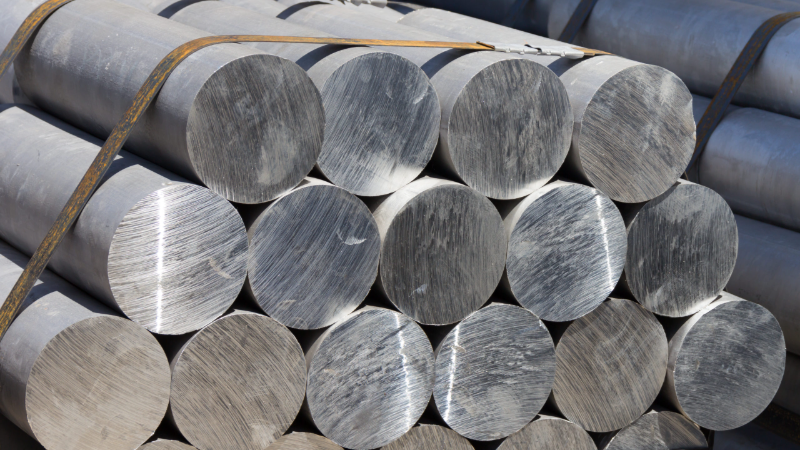
Aluminum Alloys (6061-T6 / 7075)
The lightweight aluminum alloys serve as the primary material for creating articulated arm housings and structural frame components. The combination of grades enables manufacturers to create rigid arm structures that maintain a lightweight design for total system weight. The clinical environment needs parts to undergo anodization, which enhances protection against corrosion while improving their ability to withstand surface wear.
Stainless Steel (304 / 316)
It functions well for crafting pivot joints, locking mechanisms and structural connectors that need to withstand continuous movement. These stainless grades deliver outstanding protection against corrosion, which extends their operational lifetime. The product excels in areas that need regular cleaning and sterilization procedures.
PEEK (Polyether Ether Ketone)
PEEK serves as the primary material for creating internal bushings and sliding components and insulating parts, which constitute articulated arm assemblies. The material provides exceptional wear resistance together with dimensional stability. It allows to undergo sterilization processes for use in medical applications that require high precision.
Surface Finishing For Medical Articulated Arm

Anodizing
Anodizing is commonly used on aluminum articulated arm housings and structural frames. The treatment creates a long-lasting oxide coating that enhances the material’s ability to withstand corrosion. The protective layer prevents surface damage, which occurs during repeated medical equipment arm movements.
Passivation
Passivation is typically used for stainless steel pivot joints, connectors, and fasteners. The process removes surface contaminants and strengthens the natural protective oxide layer. It also improves corrosion resistance and ensures reliable performance in sterilized medical environments.
Bead Blasting
Bead blasting is often used to create a uniform matte surface on aluminum arm housings and mechanical components. This treatment removes machining marks and prepares surfaces for anodizing. It is improving the overall appearance of medical equipment assemblies.
Precision Polishing
Polishing is applied to components such as joint interfaces and contact surfaces to reduce friction during articulated arm movement. Smooth surfaces also improve cleanliness, making it easier to maintain hygiene standards required in medical facilities.
Precision Requirements in the 5 Axis CNC Machining Process

Geometric Dimensioning Tolerances
The use of tight tolerances enables joints and connectors to align precisely according to their designated positions. Precision CNC machining maintains consistent dimensional accuracy, and multi-axis control systems enable more accurate machining operations.
Dynamic Balance Testing
The dynamic balance system ensures that the articulated arms can move forward in a stable manner. The testing process verifies that the rotating or moving components have achieved mechanical stability. The system establishes a base for all operations because it increases operational durability.
Strict Quality Verification
Medical components require strict inspection during production. Quality verification verifies that all engineering standards have been met. Advanced inspection tools measure critical dimensions and ensure components meet required medical machining specifications.
Applications Of Medical Articulated Arms In Healthcare Devices

Surgical Lighting Systems
Articulated arms hold surgical lights and allow accurate positioning during procedures. The smooth movement of joints enables the surgical staff to change lighting positions without stopping their operations.
Medical Monitor Mounting Systems
Medical monitors need stable mounting near patient beds or operating areas. Articulated arms provide organizations with adjustable elements to create better sightlines.
Diagnostic Imaging Equipment
Imaging devices often need controlled positioning near the patient. Articulated arms support these devices while maintaining stable and precise placement.
Dental Equipment Arms
Dental clinics use articulated arms to support lights, cameras, and small instruments. These arms allow quick adjustment during dental procedures.
Patient Monitoring Devices
Monitoring equipment often connects to articulated arms for convenient positioning. The system enables medical personnel to operate and change the equipment through direct device access.
Laboratory Instrument Support Systems
Laboratories use articulated arms to hold microscopes, scanners, and sensors. Precision CNC medical machining ensures stable operation during testing tasks.
Conclusion
Medical articulated arms require precise manufacturing processes that use strong materials to create their components, because these components need exact production methods to function properly. The 5-axis CNC machining process enables you to create designs that will be produced with exact specifications and unchanging output.
MedCNCParts provides expert CNC medical machining services to produce high-precision medical components. Our manufacturing expertise ensures your medical parts meet strict industry standards while maintaining reliable performance.


