
When working on medical parts, my first goal is to ensure that they are biocompatible throughout CNC machining. Understanding how to ensure biocompatibility in CNC machining helps me use the best materials, cutting tools, and surface treatments. Let’s discuss this further!
What are CNC Machined Biocompatible Components?
They are essentially ultra-precise pieces designed to function safely inside the body without producing any adverse responses. Consider things like orthopedic implants, dental devices, and surgical instruments.
CNC machining allows me to generate clean surfaces, exact measurements, and consistent quality, all of which are critical for maintaining physical safety.
Different Materials for Biocompatible Medical Components
Ti-6Al-4V (Grade 23)

This alloy combines low weight with impressive strength and stability inside the body. It also resists body fluid reactions and fatigue.
Stainless Steel 316L
This material maintains toughness, resists moisture and corrosion, and can handle repeated cleaning cycles. Its smooth, non-reactive surface helps ensure hygiene..
PEEK
PEEK is my preferred material for non-metallic medical pieces. It stays stable under sterilization, resists chemicals, and doesn’t interfere with imaging scans. This polymer delivers strength with flexibility.
Cobalt-Chrome Alloy (CoCr)

I use cobalt-chrome when durability is the top priority. It stands up well to friction, pressure, and wear, even under constant motion. This alloy’s superior hardness and biological safety make it suitable for knee implants, dental bridges, and artificial joints.
CNC Machining Processes for Biocompatible Medical Components
5-Axis CNC Milling
When I make delicate medical items that require pinpoint accuracy, I use 5-axis CNC milling. This approach allows me to cut from multiple angles in one go, reducing modifications and assuring precise readings within ±0.005mm.
The great thing about 5-axis milling is how well it handles complex forms. Using advanced programming, I can create lightweight parts with exquisite details that simple machines cannot. This approach allows for flexible design and produces smooth surfaces with a Ra µm range of 0.2-0.8.
CNC Turning

I use CNC turning to create round or cylindrical items such as bone screws, fixation pins, and tiny implant connectors. It’s good for precision rotation, with measurements within ±0.005mm to ±0.01mm. By spinning the material while cutting, I can generate smooth, exact diameters with even symmetry.
Aside from being precise, turning is great for swiftly producing small parts that require high accuracy. It is also useful for adding threads, grooves, and curves, which are very critical in medical equipment where parts must fit seamlessly. This method produces smooth surfaces with a roughness of 0.4-1.2 Ra µm.
CNC Grinding
When I really need super smooth finishes and accurate specifications, I turn to CNC grinding. It is suitable for prosthetic joints, cutting edges, and surgical blades with finishes as fine as 0.1 Ra µm. Using abrasive wheels, I can hone items to within ±0.002mm, eliminating even minor imperfections.
This procedure is important for having things appear attractive and perform well. When surfaces are ground, they become smoother, which reduces friction and makes them last longer.
Precision CNC Drilling
Precision CNC drilling is essential for producing parts with correct holes, such as those required for repairing objects or assembling implants. It keeps measurements within a tiny range of ±0.01 to ±0.02 mm, ensuring an exact fit when assembled.
Because the depth control is programmable, I can drill consistent holes in a variety of parts without having to make manual adjustments.
This method is great for drilling both small and deep holes in materials like titanium or PEEK without causing any issues. It is reliable and ensures that mechanical joints are strong and parts perform as expected. The holes it creates are neat with a surface roughness ranging from 0.8 to 1.6 Ra µm, making them perfect for precise medical fittings.
Surface Treatments for Biocompatible Components
Passivation
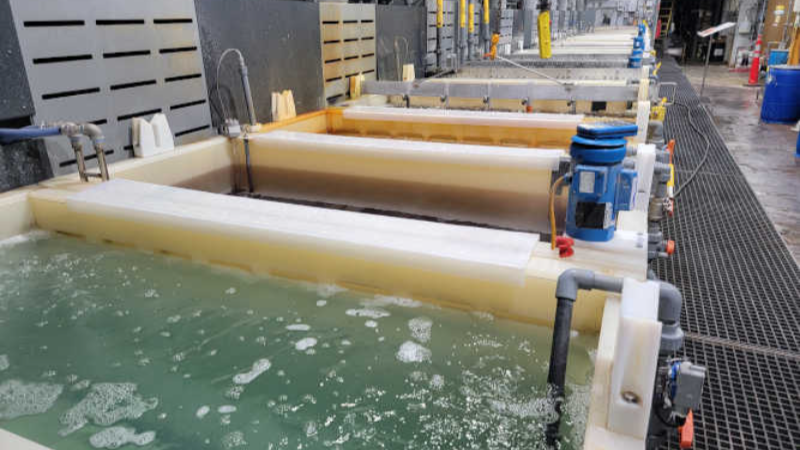
Acts as a booster for stainless steel, making it more resistant to corrosion by forming an extremely thin protective oxide coating. This useful method removes any dirt off the surface and improves the material’s function in settings such as hospitals.
Anodizing
When titanium pieces are anodized, they form a strong oxide film that increases their resistance to wear and chemicals. This method also facilitates the color-coding of implants for identification and improves their interaction with bodily tissues. After treatment, the surface becomes smooth, measuring between 0.4 and 1.0 Ra µm, and hardens to around HV 400-600.
Electropolishing
It is ideal for giving surgical blades, equipment, and prosthetic joints an extremely smooth, contamination-free finish. The process removes rough edges and imperfections from the surface, resulting in an even finish of around 0.1-0.4 Ra µm. This level of smoothness helps prevent bacteria from clinging and improves corrosion resistance.
PVD Coating

Adding a PVD coating (Physical Vapor Deposition) generates a strong, thin layer that increases surface hardness and wear resistance, attaining HV levels ranging from 1500 to 2500. This technique is used on cutting tools and prosthetic body parts to enhance their strength and interaction with the body. The resulting surface finish, usually around 0.1 to 0.3 Ra µm, decreases friction and particle release during use.
Typical Prototyping Methods for Biocompatible Components
CNC Machining Prototyping
I specialize in CNC machining for prototypes. This process allows me to make precise prototypes with accuracy up to ±0.005 mm. These prototypes are nearly identical to the final product in terms of material and performance.
Rapid Molding Prototyping

I like using rapid molding prototyping because it helps me create realistic parts super quickly. It’s good for testing both mechanical and biological properties. It creates pieces that feel and look just like the actual item.
Metal 3D Printing (Power Bed Fusion)
When it comes to complicated designs, I use metal 3D printing to accelerate the creation process. It is highly accurate, with a tolerance of ±0.05 mm. This technology enables us to quickly test designs, optimize for lightweight, and make unique implants or specific medical components.
Challenges of Machining Biocompatible Materials
Achieving Super Precise Tolerances
In medical components, achieving tight tolerances can be quite a challenge since they often need to be within just a few microns. Dealing with tool deflection and thermal expansion, especially when working with tough materials like titanium or cobalt-chrome, has been a real struggle for me.
Luckily, using multi-axis CNC systems has been a big help. Consistent calibration and vibration control are also important to achieving flawless dimensional accuracy.
Surface Finish and Sterilization Compatibility

In my experience, even tiny imperfections can catch dirt or mess with tissue healing. Getting that perfectly smooth, clean, and ready-to-sterilize surface involves using the right cutting settings and finishing techniques like electropolishing or passivation.
Designing and Customizing Parts
A lot of the components I work on have really detailed shapes that are made to fit specific patients or surgical needs. It takes some advanced CAD/CAM programming and careful planning of toolpaths, especially for tough materials.
Dealing with Different Material Types
Medical devices usually have a mix of metals, plastics, and other materials in a single assembly. I’ve come to understand that each material behaves differently when it comes to cutting and heat, so I make sure to adjust the tools and settings for each step.
Smart CNC systems make things go a little smoother since they can adjust on the fly for variations in hardness and speed, helping maintain quality consistency and decreasing the need for reworking pieces made of different materials.
Technological Solutions in CNC Machining of Biocompatible Materials

Sticking to CNC machining best practices is very important when working with materials that must be safe for the body. These practices entail combining high-quality equipment, innovative tools, and well-optimized procedures to achieve the precision, safety, and flawless finish required for medical-grade components.
Advanced Tooling and Strategies
I work with advanced tooling like wear-resistant PCD or tungsten carbide tools. These tools are great because they are optimized for feeds, cooling, and chip removal. They help reduce heat, protect surfaces, and make the tools last longer, especially when working with materials such as titanium or PEEK.
5-Axis Precision
Creating precise medical parts is easier with 5-axis CNC systems. This helps me achieve better accuracy, minimizes the need to readjust, and guarantees consistent results for implants and surgical instruments
Automation and Optimization
This helps me maintain consistency and lower the chances of human errors. Plus, digital twins are amazing because they let us anticipate problems ahead of time.
Surface Finishing
Once the parts are machined, we go on to surface finishing. This step involves getting rid of imperfections and boosting resistance. By following CNC machining best practices, these treatments help improve cleanliness, durability, and biocompatibility.
Biocompatibility Testing

Determining if a material is safe for medical use involves running a series of strict biocompatibility tests, such as the following:
Cytotoxicity
This process helps scientists figure out if a substance is harmful to living cells. They test the cells by directly exposing them to the substance, using agar diffusion, or MEM elution methods. Modern approaches like the MTT assay are used, which involves analyzing colors to get a more accurate measurement of cell viability.
Sensitization Assays
These tests help figure out if a substance can cause allergies or immune reactions when used repeatedly. One of common methods is the guinea pig maximization test, the closed patch test for devices that touch the skin.
Irritation Tests
To see if something might cause irritation, we test it on skin or mucous membranes in a controlled way. Tests like intracutaneous and primary skin irritation look for things like redness, swelling, or tissue damage.
Acute Systemic Toxicity
These tests help find out if any harmful substances could seep out from materials and get into our bodies. Acute studies look at immediate reactions right after something is injected.
Subchronic Toxicity
These tests look into the long-term effects of continuous exposure to a substance. Scientists give animals doses over a few weeks or months and watch out for any impacts on their organs, metabolism, and overall health.
Genotoxicity

This procedure checks if a substance harms DNA or leads to mutations. The Ames Test, which employs Salmonella typhimurium, identifies potential cancer-causing agents. Vivo tests confirm the genetic safety in living organisms to minimize the risks of mutation or cancer development.
Implantation Tests
They are used to simulate real-world conditions for materials inserted inside the body, such as sutures, pacemakers, and bone implants. These tests help analyze how tissues react and verify that the substance remains safe.
Hemocompatibility
A blood-contacting device must undergo hemocompatibility testing. This testing allows us to better understand how they may affect red blood cells, blood coagulation, and the immune system. These tests help ensure that there is a low danger of clotting or inflammation.
Carcinogenesis Bioassay
This determines if prolonged exposure to a drug can cause cancer. Researchers monitor test animals throughout their lives to detect any aberrant cell growth.
Developmental and Reproductive Toxicity
This evaluation investigates if a chemical affects fertility, embryonic growth, or offspring development. Its goal is to ensure that extended contact with body tissues does not have a harmful impact on reproductive health.
Case Studies in CNC Machining of Biocompatible Materials
Here are a few examples of how CNC machining has helped me solve problems when creating medical products.
Ultrasound Scanning Probe

I used 5-axis CNC machining to create lightweight aluminum shells with elaborate patterns. The acoustic qualities of the aluminum alloy were ideal for human tissue, resulting in clear and accurate imaging.
Customized Skull Implant
So, when developing a custom-made skull implant, I chose titanium since it is tough and compatible with bone. I designed the CNC program using 3D images of the patient’s head to achieve a precise fit.
Dental Implants
To minimize abnormalities, PEEK dental implants have to be made with precise temperature control. I fine-tuned the tool paths and cutting rates to keep the material in great shape.
We ended up with precise and strong implants that fit properly, providing increased comfort and long-term performance for patients, with the additional benefit of improved anatomical compatibility.
Conclusion
To me, ensuring that my work is safe for the human body is really important. I make a concerted effort to ensure that every device I create can function properly in the body. That is why I continue to use advanced CNC processes and dependable materials to reliably offer safe solutions for patients.
At MedCNCParts, we prioritize quality and safety. If you’re seeking for implants, tools, or unique prototypes, our team can help. Reach out today.


